noticeable
How to Keep the Lights On: Preserving Queer Culture in the Age of Artificial Intelligence
Queer culture was never designed to be efficient, legible, or scalable. It survived by being awkward, excessive, local, and inconvenient. As artificial intelligence rewrites how people meet, remember, and desire, the question is no longer how queer culture becomes visible, but how it stays alive without being flattened into a dataset.
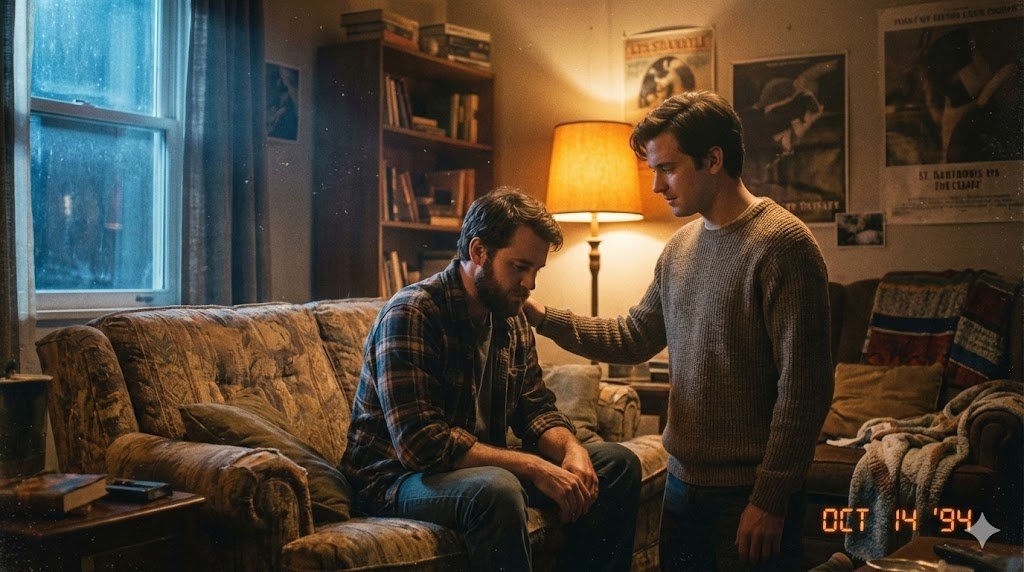
Queer culture has always been fragile, which is another way of saying it has always been alive. It did not survive because it was well organized, well funded, or well understood. It survived because people kept showing up, even when it was inconvenient, unsafe, or deeply embarrassing. It survived through bars that barely paid rent, friendships that lasted longer than relationships, gossip that carried history better than archives, and spaces that disappeared just as they became meaningful.
None of this translates well into artificial intelligence.
AI prefers clarity. Queer culture thrives on contradiction. AI prefers scale. Queer culture grows sideways. AI prefers permanence. Queer culture depends on disappearance, reinvention, and forgetting at the right moment. This does not mean the two cannot coexist. It means their values are misaligned in ways that matter.
The danger is not that AI will erase queer culture outright. Erasure is dramatic and therefore easy to protest. The real danger is preservation by simplification. Once something is preserved incorrectly, it stops evolving. It becomes a museum object that can be admired but no longer lived in.
Every generation believes it is losing something essential. Sometimes this is nostalgia. Sometimes it is accurate diagnosis. Queer elders once worried that legalization and acceptance would dissolve subculture into normality. Younger people now worry that platforms and algorithms will dissolve it into content. Both fears point to the same tension. Culture cannot survive if it becomes only representation. It needs practice.
For earlier generations, queer culture was learned by proximity. You learned by being in rooms where you did not quite belong yet. You learned by listening to conversations that were not meant for you. You learned by watching how people navigated danger and pleasure at the same time. None of this was instructional. It was ambient. It required patience and physical presence.
Today much of this learning is expected to happen through screens. That is not inherently wrong. Screens have made queer life possible for people in places where physical proximity would never have existed. But screens also flatten context. They turn living cultures into examples. They teach outcomes without processes.
This is where artificial intelligence enters quietly and confidently. It does not just distribute culture. It organizes it. It decides what is relevant, what is repeated, and what disappears. It trains on what already exists and then serves back a cleaned version. In doing so, it favors the loudest, clearest, most legible expressions. Subtlety is treated as error. Ambiguity is treated as noise.
Queer culture has never been noise to itself. It has always been a language spoken fluently by those who needed it. But languages that are not written down correctly risk being mistranslated forever.
Preserving queer culture for new generations does not mean freezing it. It means protecting its ability to remain unfinished. That is a difficult task in a technological environment that rewards completion, coherence, and branding.
Young queer people today often encounter their culture first as content. Short videos. Infographics. Advice threads. Identity explanations with bullet points. There is nothing malicious about this. It reflects the way knowledge circulates now. But culture that arrives fully explained arrives already deadened. You are told what it means before you have the chance to misunderstand it productively.
Misunderstanding is essential. It is how people test boundaries. It is how they learn context. It is how they discover that there is more than one way to belong. Artificial intelligence tries to eliminate misunderstanding. It offers clarity at every step. It fills gaps too quickly.
If queer culture becomes something that is primarily explained by machines, it will become something that behaves like machines expect it to behave. That is the real risk.
So how do you preserve something that depends on friction in a system designed to remove it.
The first answer is inconvenient and therefore correct. You preserve queer culture by insisting on spaces that do not optimize. Physical spaces. Social spaces. Emotional spaces. Places where people are allowed to be wrong for a while. Where identities can be tried on and discarded without documentation. Where nothing is recorded unless someone remembers it imperfectly.
This means bars. It means community centers. It means kitchens, back rooms, reading groups, choirs, sports teams, activist meetings, and boring committee work. It means showing up even when nothing spectacular happens. Algorithms cannot replicate boredom, and boredom is where culture actually forms.
The second answer is transmission without packaging. Elders often worry about how to pass things on. They imagine manuals, archives, official histories. These have their place. But queer culture was rarely passed on through instruction. It was passed on through exposure. Younger people watched older ones fail, argue, forgive, relapse, and survive. That process does not scale. It should not.
Artificial intelligence excels at summarizing. It is terrible at conveying stakes. It can tell you what happened. It cannot show you why it mattered in the moment. New generations need access not only to stories of triumph, but to stories of confusion, compromise, and moral uncertainty. These stories rarely perform well online. They are too long. Too unresolved.
Preserving queer culture means telling those stories anyway, without adjusting them to algorithmic taste.
The third answer is resisting the urge to make everything legible. There is a growing pressure to explain oneself clearly at all times. Labels are demanded early. Narratives are expected to be consistent. This is partly political and partly technological. Platforms reward clarity. Confusion is suspicious.
But queer culture was built by people who did not yet have the words. Or who rejected the available ones. Or who used them incorrectly on purpose. If future generations inherit only polished language, they will struggle to articulate experiences that do not fit existing categories.
One of the most radical things older queer people can offer is permission to be unclear. To say I do not know yet and mean it. To model lives that changed direction multiple times without apology. Artificial intelligence cannot model this well because it treats change as anomaly rather than process.
Another part of preservation is teaching discernment. Not everything that is visible is meaningful. Not everything that is viral is valuable. Younger generations are not naive. They know platforms manipulate attention. But knowing this abstractly does not always translate into resistance emotionally. Desire still follows what is rewarded.
Queer culture must teach how to read systems critically without retreating from connection. That means talking openly about how algorithms shape desire, taste, and community formation. It means demystifying the technology without turning it into a villain. Fear is less useful than literacy.
At the same time, not everything needs to be mediated by technology. There is a growing temptation to use AI as a substitute for community. As a place to process identity safely. As a rehearsal space before engaging with real people. This can be useful in moderation. But if queer life moves entirely inward, into private interactions with systems, it loses its collective dimension.
Culture requires witnesses. It requires disagreement. It requires shared risk. Artificial intelligence offers privacy and control. Culture requires exposure and compromise.
Preserving queer culture also means accepting that not everything should be preserved. Some traditions deserve to die. Some hierarchies were never worth maintaining. Nostalgia is not stewardship. The goal is not to recreate the past but to protect the conditions that allowed new forms to emerge.
Those conditions include conflict. Generational tension is not a failure. It is a sign that culture is still alive. When older queer people complain that younger ones do things differently, they are participating in a ritual as old as queerness itself. The mistake is assuming difference equals loss.
The real loss would be a generation that feels it must conform perfectly to inherited narratives in order to belong. Artificial intelligence is very good at enforcing inherited patterns. Humans must remain better at breaking them.
Finally, preserving queer culture requires accepting inefficiency. This is perhaps the hardest lesson in a world obsessed with productivity. Culture is slow. It repeats itself. It wastes time. It includes people who are difficult and unprofitable. It does not produce clean outcomes.
Artificial intelligence promises speed, clarity, and optimization. Queer culture must insist on duration, ambiguity, and excess. Not as a slogan, but as a practice.
New generations will use AI. They should. The technology is not going away. The task is not to ban it from queer life but to refuse to let it define the terms of belonging. AI can assist with logistics, translation, access, and safety. It should not be allowed to dictate desire, identity, or memory.
Queer culture survives when people meet without knowing exactly what they are looking for. When they stay even after disappointment. When they argue and reconcile. When they learn from people who are inconvenient to admire.
If future generations inherit only what can be summarized, optimized, and stored indefinitely, they will inherit a culture that looks intact but feels hollow. If they inherit practices that resist capture, they may lose some clarity but gain something better.
They will gain the right to become themselves slowly, incorrectly, and together.
And that has always been the point.