The Taxonomy of the Quantified Self
There was a time, in the not-so-distant past, when the human desire for visibility was a vanity of the flesh. To be "seen" was a social transaction.
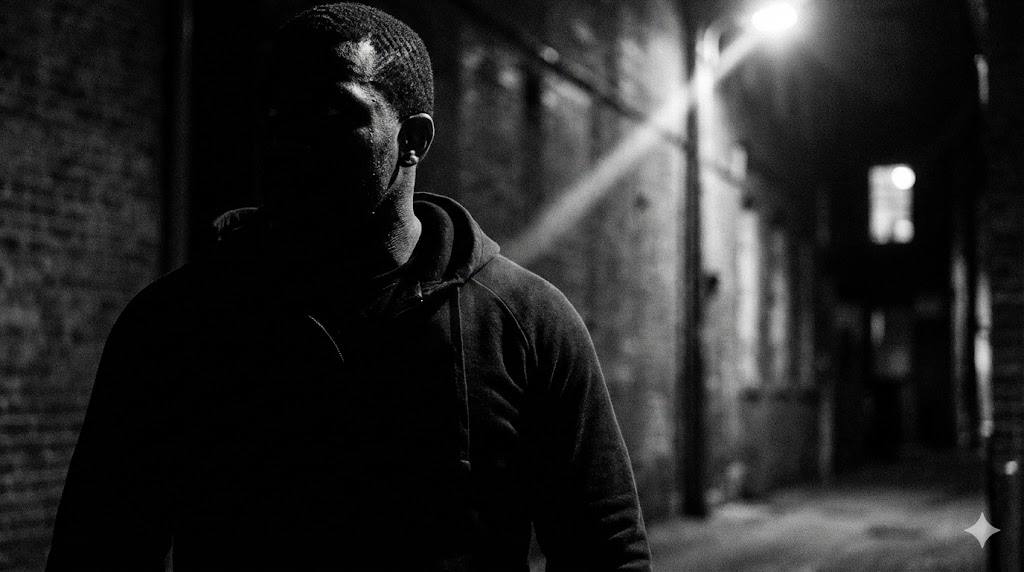
There was a time, in the not-so-distant past, when the human desire for visibility was a vanity of the flesh. To be "seen" was a social transaction. It required a public square, a stage, or at the very least, a scandalous hat worn to church. It was an analog negotiation between the observer and the observed, fraught with the messy, subjective judgments of human beings. You wanted to be seen to be admired, to be feared, or perhaps simply to be acknowledged as existing in the shared hallucination of society. It was a chaotic, inefficient, and deeply human endeavor.
We have, with remarkable efficiency, paved over this quaint notion. Visibility is no longer about photons hitting a retina; it is about data matching a query. The shift has been quiet, bureaucratic, and sold to us under the banner of that great modern religion: Convenience. We are told that we want "personalized experiences," "seamless travel," and "relevant content." What this actually means is that we have agreed to transform ourselves from biological entities into machine-readable assets. To be visible now means to be parsed, categorized, and indexed by a system that views a human soul not as a mystery, but as a collection of metadata tags waiting to be optimized.
This transition represents a fundamental change in the ontology of the person. In the old world, you existed even if the bureaucrat lost your file. In the new world, if the algorithm cannot classify you, you are effectively a ghost. You are "unreadable," and in an era of automated governance and algorithmic capitalism, being unreadable is indistinguishable from being dead. The system does not care if you are charming, or kind, or possess a wicked sense of humor. It cares about your credit score, your biometric hash, and your click-through rate. If these things cannot be ingested and processed, you are not a citizen; you are an error code.
The danger here is not just surveillance—that is a boring, obvious tyranny. The danger is the "upgrade" to a reality where we are forced to perform for the machine. We curate our lives not to impress our neighbors, but to satisfy the logic of the database. We use keywords in our resumes not to describe our skills, but to bypass the Applicant Tracking System. We structure our dating profiles not to attract a lover, but to survive the sorting mechanism of the app. We have become the SEO managers of our own existence, flattening the jagged peaks of our personalities into searchable, flat plains that the crawlers can navigate without tripping.
The Procrustean Bed of Metadata
The mythological Procrustes had a bed to which he fitted his guests; if they were too short, he stretched them; if they were too long, he chopped off their legs. The modern algorithmic system operates on the same principle, but we call it "standardization." To be understood by a system, one must conform to the system's taxonomy. Nuance is the enemy of the database. Ambiguity is the enemy of the sort function. Therefore, to be visible, one must amputate the parts of oneself that do not fit the drop-down menu.
Nowhere is this more evident than in the labor market. The "knowledge worker" believes they are hired for their unique mind. In reality, they are hired because their CV contained the correct density of buzzwords to pass a Boolean filter. A seminal report by Harvard Business School titled Hidden Workers: Untapped Talent revealed that automated hiring systems are responsible for rejecting millions of viable candidates simply because they do not match the rigid, often arbitrary criteria set by the software (Harvard Business School, "Hidden Workers: Untapped Talent", 2021). The system does not "see" the worker's potential; it scans for a specific sequence of characters. If you are a poet who learned to code, the system sees a mismatch. If you are a coder who writes like a robot, the system sees a match. We are breeding a workforce of technicians who are terrified of being interesting.
“We are voluntarily engaging in a mass act of auto-lobotomy, shaving off the complex, contradictory, and messy parts of our humanity so that we might fit more comfortably into the database fields of a corporation that views us as 'Human Capital Inventory'.” — On the reduction of the self to a database entry.
This demand for machine readability extends to our physical selves. The passport control officer, a human being capable of judgment and discretion, is being replaced by the e-gate. The e-gate does not look you in the eye. It measures the distance between your pupils. It compares a mathematical map of your face to a stored jpeg. If you have changed your hair, or aged poorly, or simply look tired, the machine rejects you. You are detained not because you are suspicious, but because you failed to match your own metadata. The "upgrade" here is speed, we are told. But the cost is the submission to a biometric regime where your face is no longer your own; it is a barcode that grants you access to the world, provided it scans correctly.
The irony is that we are encouraged to celebrate this "identity." We are told to "be ourselves." Yet the systems we inhabit are obsessed with categorizing that self into rigid, immutable groups. The machine loves identity politics not because it cares about justice, but because identity politics provides excellent labels. "Male," "Female," "Non-binary," "Hispanic," "White", these are all just rows in a spreadsheet. The more you label yourself, the more "visible" you become to the system, and the more easily you can be targeted, sold to, and predicted. The ultimate victory of the system is to convince the prisoner that wearing a barcode is a form of self-expression.
The Tyranny of the "Smart" City
We are told that the environment itself must "understand" us. The "Smart City" is the urban planning equivalent of a stalker who insists they are just trying to keep you safe. Sensors track our movements. Cameras analyze our gait. Your phone handshakes with every wifi router you pass, leaving a digital breadcrumb trail of your life. This is presented as an upgrade in efficiency. Traffic lights will be optimized! Crime will be predicted! (A concept that should terrify anyone who has read Philip K. Dick).
But what does it mean to be "understood" by a city? It means that your anonymity is stripped away. The flâneur, that 19th-century archetype of the solitary walker observing the crowd while remaining unnoticed, is extinct. You cannot be an observer in a Smart City; you are the observed. You are a data point moving through a matrix. If you linger too long on a corner, the system flags you as "loitering." If you run, it flags you as "fleeing." If you walk in a way that deviates from the aggregate average of millions of other walkers, you are an anomaly.
The system's understanding is also dangerously flawed. It suffers from what we might call "contextual blindness." A camera can see you holding a knife; it cannot see that you are cutting a birthday cake. To the AI, visual patterns are devoid of narrative. We see this in the increasing reliance on predictive policing algorithms, which mathematically reinforce existing prejudices. A study by the Royal United Services Institute (RUSI) highlighted that algorithms used in UK policing were built on biased historical data, leading to a feedback loop where "high risk" areas were simply the areas that had been over-policed in the past (RUSI, "Data Analytics and Algorithms in Policing in England and Wales", 2020). The system "understood" these neighborhoods not as communities, but as heat maps of criminality, effectively criminalizing the geography itself.
This is the cruelty of the machine gaze. It claims to be objective because it is math. But math is just a language, and like any language, it can be used to write lies. When a system "understands" you as a risk, a credit liability, or a demographic target, it treats you accordingly. And because it is a system, you cannot argue with it. There is no manager to speak to. There is no appeal to common sense. The computer has decided, based on a logic that is proprietary and opaque, that you are not entitled to the loan, the job, or the flight. You have been seen, you have been measured, and you have been found wanting by a black box.
The Privilege of Illegibility
If visibility means being understood by systems, then true freedom in the 21st century might lie in being misunderstood. We are approaching a point where "illegibility" will be the ultimate luxury good. The wealthy already practice this. They use private LLCs to obscure their ownership of property. They travel via private terminals that bypass the biometric dragnet of commercial aviation. They employ teams of lawyers to scrub their digital footprints. They understand that in an age of total transparency, privacy is power.
For the rest of us, the "upgrade" of algorithmic visibility acts as a ceiling on our potential. We are trapped in the feedback loop of our own data. The music streaming service plays us songs it knows we will like, preventing us from discovering the strange, challenging jazz record that might change our lives. The news aggregator feeds us opinions we already agree with, calcifying our worldviews. The system is designed to keep us consistent, predictable, and profitable. It optimizes us for consumption, not for growth.
There is a profound melancholy in this. We have traded the messy, dangerous, vital experience of being seen by other human beings, with all the risk of rejection and the thrill of connection, for the sterile safety of being processed by a machine. We prefer the "like" to the compliment. We prefer the "match" to the flirtation. We prefer the credit score to the handshake. We have decided that we would rather be safe data than vulnerable humans.
And the worst part? We thanked them for it. We unboxed the surveillance device, plugged it into our living room, connected it to the wifi, and called it a "smart speaker." We uploaded our faces to the cloud and called it "unlocking our potential." We accepted the collar because it came with a very convenient app. Visibility is no longer a human right; it is a system requirement. And we are all running the update, waiting for the progress bar to reach 100%, oblivious to the fact that the update is deleting the user.