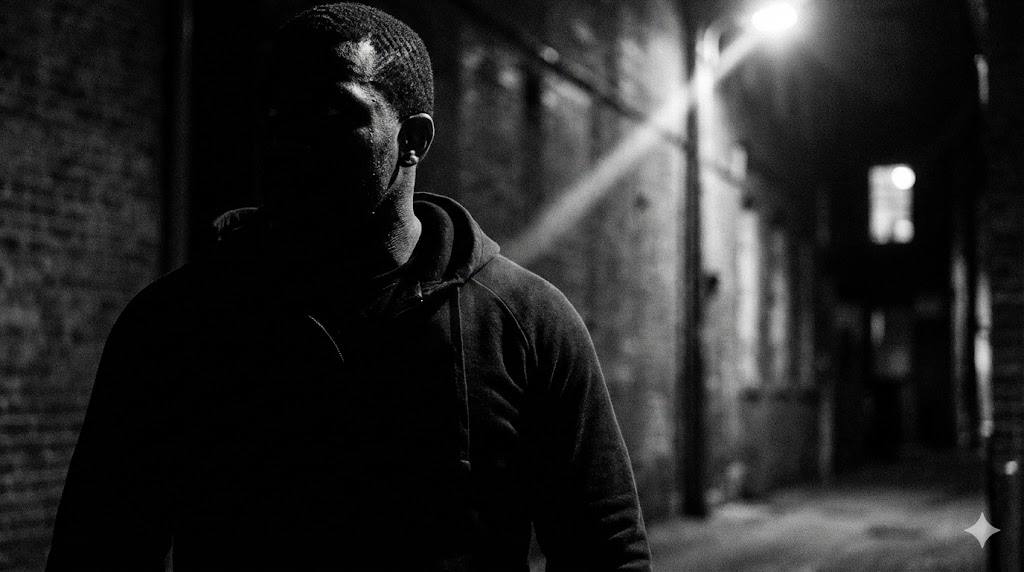
The Nostalgia for the Shouting Man
There is a perverse kind of romance in remembering the old totalitarianism, or even the old, clumsy democracy. One remembers the shouting. One remembers the man standing on a soapbox in Hyde Park, or the sweaty politician banging a podium until his fist turned the color of a bruised plum...

There is a perverse kind of romance in remembering the old totalitarianism, or even the old, clumsy democracy. One remembers the shouting. One remembers the man standing on a soapbox in Hyde Park, or the sweaty politician banging a podium until his fist turned the color of a bruised plum. There was a physicality to the lie. It occupied space. It required lung capacity, saliva, and a certain shamelessness that, while repellant, was at least observable. You could look at the propagandist and see the sweat on his brow, the desperation in his eyes, the cheap fabric of his suit. You could pick up the leaflet he shoved into your hand, read the hysterical font, crumble it into a ball, and throw it into the gutter. It was an interaction between two biological entities: the liar and the skeptic.
In that era, manipulation was an act of aggression. It was a siege on your senses. The poster of the Dear Leader stared at you, yes, but it was a static stare. It did not know you. It did not know that you were secretly worried about your hairline, or that you had just browsed for divorce lawyers, or that you were more likely to agree with a fascist statement if it was presented in a shade of calming blue at 11:30 PM on a Tuesday. The old propaganda was a blunderbuss; it fired shrapnel into the crowd and hoped to hit a believer. It was inefficient, wasteful, and noisy. And because it was noisy, it granted you the dignity of resistance. You could cover your ears. You could close your eyes. You could walk away.
We have now entered the age of the Silent Nudge. The blunderbuss has been replaced by the sniper rifle, equipped with a silencer and a scope that can see into your subconscious. The noise has vanished. The modern manipulator does not shout; he does not even whisper. He simply rearranges the architecture of your reality so that the path he wants you to take looks like the only path available. He does not hand you a leaflet; he alters the search results. He does not make a speech; he curates your feed. He effectively hides the world from you, leaving only a corridor of mirrors that reflect your own biases back at you until you are convinced that your narrow, curated hallucination is the absolute truth.
This is a decisive change in the history of human agency, presented, naturally, as a user interface upgrade. We traded the messy, visible conflict of ideas for "relevance." We traded the argument for the algorithm. And in doing so, we have rendered democracy, which relies on a shared, visible public square, functionally obsolete. The public square is now a collection of private, soundproof cells, where we are each fed a personalized diet of confirmation bias by a machine that simulates agreement. We are no longer citizens debating the future; we are patients in a digital asylum, sedated by the comfort of never being challenged.
The Architecture of the Trap
The genius of this new system lies in its invisibility. The most successful prison is the one where the prisoner believes he is holding the key. When you scroll through your social media feed, you believe you are exercising free will. You choose to stop on this video; you choose to click on that article. But this is a delusion. You are a rat in a Skinner box that has been gamified. The choices have been pre-filtered. The menu has been rigged. The "Discover" page is not a voyage of discovery; it is a feedback loop of behavioral prediction.
Consider the concept of "dark patterns," a term that sounds like something from a fantasy novel but is actually the bread and butter of the modern web. These are interface designs specifically engineered to trick the user into doing things they didn't mean to do, signing up for insurance, agreeing to tracking, or spending more time on a platform than intended. A study by the European Commission found that 97% of the most popular websites and apps used at least one dark pattern to manipulate user behavior (European Commission, "Behavioural Study on Unfair Commercial Practices in the Digital Environment", 2022). Ninety-seven percent. This is not a few bad apples; this is the orchard. The entire digital ecosystem is built on the premise that the user is a resource to be mined, not a person to be respected.
The old manipulator tried to change your mind. The new manipulator tries to bypass your mind entirely. They target the autonomic nervous system. They use the color red to trigger urgency. They use the infinite scroll to eliminate the "stopping cue" that the human brain needs to reassess its actions. They use "variable rewards", the same mechanism that makes slot machines addictive, to keep you refreshing the page. This is not persuasion; it is hacking. It is the exploitation of known bugs in the human operating system. To call this "marketing" is an insult to the snake oil salesmen of the past, who at least had to work for their commission.
“We have moved from a world where we debated the truth to a world where we are quietly inoculated against it, one algorithmic suggestion at a time.” — On the transition from public discourse to private manipulation.
Furthermore, the sheer asymmetry of this relationship is terrifying. The entity trying to persuade you, be it a corporation, a political campaign, or a state actor, has access to a supercomputer's worth of data about your psychological vulnerabilities. You, on the other hand, have a tired brain and a thumb. It is not a fair fight. It is Bambi versus Godzilla, if Godzilla were invisible and whispering in Bambi's ear that the forest fire is actually a good thing for the economy.
The effectiveness of this silent manipulation is chilling. A recent study by researchers at EPFL in Switzerland demonstrated that Large Language Models (AI) significantly outperformed humans in persuasive debates, particularly when the AI had access to the demographic data of the person it was trying to persuade (EPFL, "On the Conversational Persuasiveness of Large Language Models", 2024). The machine does not need to believe in the cause. It does not need passion. It just needs to calculate the optimal sequence of words to unlock your specific lock. It picks the lock of your conviction without making a sound.
The Death of Embarrassment
One of the most significant casualties of this shift is the social cost of lying. In the noisy era, if a politician or a company lied, they had to do it in public. If they were caught, there was a spectacle. There was shame, or at least the performance of shame. There was a record. The lie was a distinct object that could be pointed at and ridiculed.
In the era of algorithmic targeting, the lie is ephemeral and personalized. A political campaign can run ten thousand variations of an ad on Facebook. To the coal miner, they promise to save coal. To the suburban mother, they promise to save the trees. To the angry young man, they whisper about betrayal. To the retiree, they whisper about safety. These ads are "dark posts", visible only to the target and the algorithm. They evaporate upon impact. There is no public record. There is no contradiction because the coal miner never talks to the suburban mother about the ad they saw.
This fragmentation destroys the possibility of accountability. How can you hold power to account when power is telling a different story to every single voter? We are fighting ghosts. We are trying to fact-check a mist. The manipulator has been liberated from the burden of consistency. They can be all things to all people, simultaneously, without ever sweating under the lights of a television studio.
And let us not forget the convenience of it all. We have accepted this surveillance and manipulation because it comes wrapped in the velvet cloak of convenience. We like that the map knows where we are going. We like that the shop knows what size pants we wear. We like that the news feed confirms our suspicion that everyone else is an idiot. We have sold our autonomy for free shipping and a feeling of righteous indignation.
The cynic might argue that humans were always sheep, looking for a shepherd. Perhaps. But at least the old shepherds had to use a dog and a crook. They had to be present. The new shepherd is code. The new shepherd is a mathematical formula optimizing for "time on site." And unlike the human shepherd, who might occasionally care if the sheep fall off a cliff, the algorithm is indifferent. If falling off a cliff generates high engagement, the algorithm will pave the road to the edge and install a diving board.
The Silence of the Lambs (and the Lions)
The truly terrifying aspect of this silent revolution is that it is painless. There are no jackboots on the cobblestones. There is no knock at the door in the middle of the night. There is just a gentle vibration in your pocket. A notification. A suggestion. A nudge.
We are losing the capacity for critical thought not because it is being suppressed by force, but because it is being atrophied by ease. Why argue when the machine agrees with you? Why search when the answer is suggested? Why struggle with a complex idea when a meme encapsulates your feelings perfectly? We are being infantilized by our own tools. We are becoming a species of cognitive toddlers, fed a slurry of pre-chewed information by a digital nanny that tracks our every swallow.
“Democracy dies not in darkness, as the slogan goes, but in the soft, warm glow of a personalized timeline that tells you exactly what you want to hear until you are too comfortable to stand up.” — On the sedative nature of algorithmic confirmation.
The noisy manipulation of the past had a flaw: it woke you up. It was annoying. It provoked a reaction. The silent manipulation of the present lulls you to sleep. It feels like your own internal monologue. When the algorithm plants an idea in your head, you do not recognize it as an invader. You think it is your own brilliant insight. You think you decided to buy that car, or vote for that demagogue, or hate that minority group. You are the perfect puppet because you cannot see the strings. In fact, you would fight to the death to deny that the strings exist.
So, we find ourselves nostalgic for the shouting man. We miss the liar who stood in the light. We miss the messy, inefficient, loud marketplace of ideas where you could at least identify the enemy. Now, the enemy is everywhere and nowhere. It is in the server farm. It is in the code. It is in the phone you are holding right now. And it is very, very quiet.
Perhaps it is time to make some noise again. To break the silence of the feed. To disagree with the suggestion. To confuse the algorithm. Because if we do not, we will drift into a future where "freedom" is just a marketing term for the customized cage we built for ourselves, and "choice" is merely the selection between two brands of identical feed, served to us in the trough of our own making. The silence is not peace. It is the sound of the digestion process. And we are the meal.